Market commentary August
 By
By
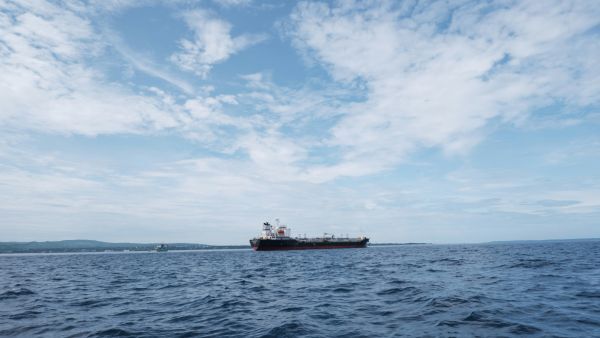
At the end of June, things briefly looked like they were easing. The rapprochement between the United States and Iran pushed gas prices at the spot and near-term forward markets towards EUR 40/MWh. For a few days, a reopening of the Strait of Hormuz appeared within reach. The developments in July, however, put an end to hopes of a swift resumption of Qatari LNG production.
Over four weeks, the TTF August contract rose by 57 %, from EUR 40.50/MWh on 25 June to EUR 63.58/MWh on 24 July. The increase came in two phases: first a steady climb as the hoped-for reopening failed to materialise, then an acceleration from mid-July after transit came to an almost complete halt. QatarEnergy has extended its force majeure until at least mid-September and is preparing an extension to October.
The consequences are visible in storage levels. EU LNG imports have been running well below 3 TWh per day since mid-July, the lowest level since 2024. At the same time, Asian LNG demand is rising again. European storage stands at 56 % at the end of July against 68 % a year earlier. We currently consider a level of around 70 % by the end of the injection season to be realistic.
On EU storage targets, a clarification is worth making that often gets lost in reporting. The binding 90 % mark remains in place but, since the amendment in summer 2025, is softer than the number suggests. Member states may deviate by up to ten percentage points, and the Commission can grant a further five. Moreover, the target no longer has to be met on 1 November but at any point between 1 October and 1 December. This removes the mechanism that drove prices higher in 2022, when all buyers had to enter the market simultaneously. It partly explains why the market is not panicking despite low storage levels. A further explanation is the expectation among market participants that Qatari LNG volumes will return towards year-end and that global LNG supply is steadily increasing through new projects.
The shape of the current forward curve is also instructive. The August contract trades at EUR 58/MWh, some EUR 16 above Cal-2027, while Q4-2026 sits practically level with August and carries none of the usual winter premium. The market is therefore concentrating the burden on the months through to the end of winter and expects conditions to ease from Q2-2027 onwards.
In power markets, the gas price has passed through almost unfiltered. The German August contract rose from EUR 98/MWh at the end of June to EUR 134/MWh on 22 July, the highest level since the contract began trading, and closed the month at EUR 130/MWh. Against the pre-conflict level from February, that is an increase of 72 %. Breaking down the EUR 32/MWh rise since the end of June is instructive: assuming a gas-fired plant efficiency of 55 %, EUR 31.5/MWh is attributable to higher gas costs alone. The clean spark spread remained virtually unchanged at around minus EUR 5/MWh. Power and gas moved in lockstep in July, with gas remaining the price-setting technology. How profitable coal-fired generation became as a result is shown by the clean dark spread: from around EUR 5/MWh at the end of June it widened to around EUR 28/MWh by month-end. Accordingly, German hard coal generation rose by 22 % month-on-month to 1,839 GWh in July.
This closes the loop back to the carbon market. On 17 July, the European Commission presented its proposal for revising the Emissions Trading System: the linear reduction factor will be relaxed for the period after 2030, automatic cancellation of allowances in the Market Stability Reserve (MSR) will be abolished, and an Industrial Decarbonisation Bank is to support emissions reduction from 2028. An adjustment to Article 29a (a mechanism that releases allowances from the MSR into the market in the event of sharp price increases) was not included. The market jumped from EUR 79/t to almost EUR 87/t within three trading days, then gave back nearly all of the move. At month-end, the December contract stands at around EUR 81/t.
One of the most important changes is not reflected in the price at all. Free allocation is extended to 2040, and to 2038 for CBAM sectors, but from the 2031 allocation period it will be tied to investment conditions: anyone wishing to retain it must submit a verified and publicly accessible investment pathway towards climate neutrality by 2050. Only the 10 % most efficient installations per benchmark are exempt. The real impact of the ETS review lies in the long-term investment signal, and it is precisely that signal which the review has dampened through the weakened reduction factor after 2030. The proposals, however, merely mark the start of a legislative process likely to run into the first quarter of 2027. Further details on the ETS review can be found on our website: EU-ETS-Review 2026: Änderungen und EUA-Preise | INERCOMP
What supported the power price in July was therefore not the ETS review but other factors. Heat, and the resulting partial curtailment of nuclear generation and weak run-of-river hydropower, drove thermal output higher. Only wind power proved price-dampening in July, with high generation volumes. When assessing the cost impact, it is important to distinguish between level and change. In level terms, the carbon price is anything but marginal: at EUR 81/t it contributes around EUR 30/MWh to the marginal cost of a gas-fired plant. In the August power contract's increase over the course of July, however, it played almost no part, contributing roughly EUR 0.4/MWh against EUR 31.5/MWh from gas. Anyone seeking to explain this summer's power price increase needs to look to the Strait of Hormuz, not to Brussels.
A look at South-East Europe shows how unevenly the crisis is distributed within the continent. The Hungarian August contract closed on 31 July at EUR 192/MWh, with the premium over Germany at EUR 61/MWh. At the end of June that spread stood at EUR 22/MWh, on 24 July at EUR 27/MWh. In the five trading days following the ceasefire of 25/26 July, Germany corrected by just under 2 %, while Hungary rose by a further 20 %. Should the Hungarian August forward price be realised, it would be the most expensive month at HUPX since December 2022 and the second-highest August on record, after EUR 495/MWh in 2022. The only fifteen months in which the Hungarian baseload price has ever exceeded this level all fall between October 2021 and December 2022, the years of the European energy crisis. Hungary has little flexible generation of its own, and with outages at the Paks nuclear power plant and high gas prices, the dependence on thermal import capacity feeds through to the price in full. Whether the current pricing anticipates genuine scarcity or is speculative overshoot cannot be said with certainty.
The trend, however, is clear. Price differences within Europe are rising with political crises and weather extremes. Those waiting for lower prices in the short term are betting that something shifts in the Strait of Hormuz that has not shifted in weeks.
Simon Koller
For the Inercomp team