
Our assessment
Overall, various stakeholders had called for (and in some cases expected) considerably stronger, more price-relevant changes. The proposal, for example, makes no changes to Article 29a of the ETS Directive, which contains an automatic mechanism for releasing additional volumes depending on the EUA price - one that is largely toothless given its current parameters. A significant tightening of this article would have had a stronger price-dampening effect.
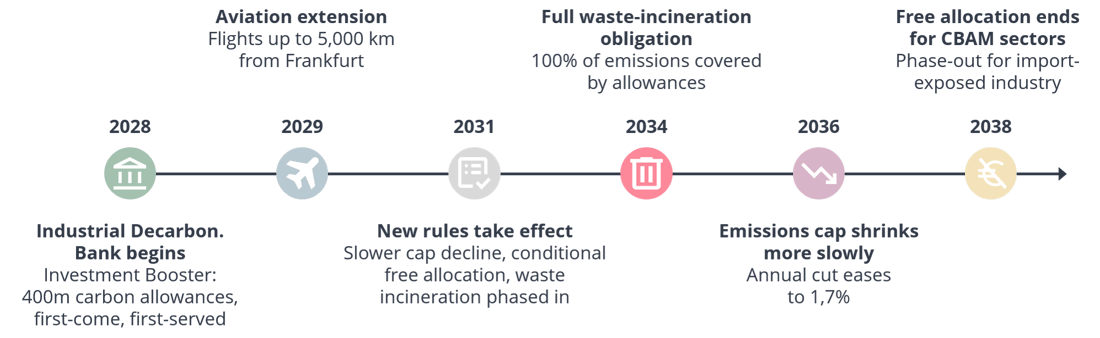
The biggest immediate price impact would likely come from the Industrial Decarbonisation Bank's allowance volumes, since they create additional supply. However, these volumes had already been partly anticipated through various prior signals. Some had been expected as early as 2027; they will now arrive no sooner than 2028.
The changes now actually proposed alter the ETS only marginally and fall well short of the additional supply pressure the market had feared; some measures, moreover, only take effect after 2030. Precisely because the reform is weaker than expected, it reinforces our fundamentally bullish outlook on EUAs.